Idea Generation
A Structured Pipeline for Discovering High-Conviction Opportunities
Idea Generation helps investment teams aggregate, analyze, and rank key investment inputs from any data source with speed and discipline. Instead of relying on ad hoc screens, scattered spreadsheets, or manual workflows, analysts use a structured, repeatable system to identify signals, test hypotheses, discover untapped alpha, and advance high-quality ideas into deeper research.
Designed for fundamental investors, Idea Generation brings clarity, consistency, and traceability to the earliest stage of the investment process. It ensures that every idea begins with structure—and that teams spend less time hunting for opportunities and more time analyzing them.
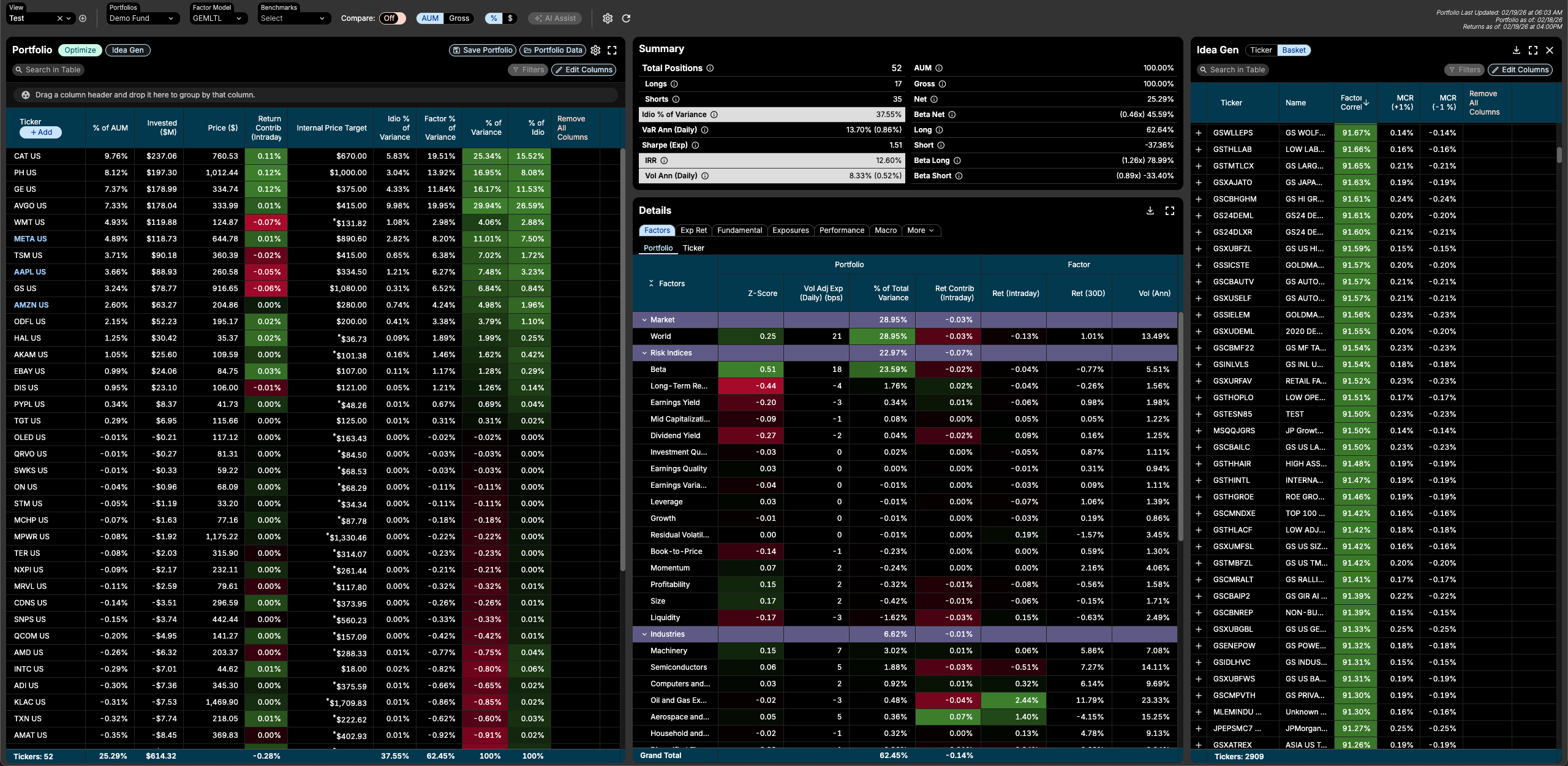
A Stronger Foundation for Idea Discovery
Key Capabilities
-
Integrated screening across internal and external datasets
-
Signal-based ranking and scoring
-
Repeatability and backtest analysis
-
Comparison of internal estimates vs. consensus
-
Connected workflow into RMS
-
Connected workflow into Portfolio Construction for PM visibility
-
Full auditability and research traceability through Nexus
-
Analyst-level transparency into idea flow, prioritization, and research impact
Why Idea Generation Matters
Use Cases
- Analysts scanning for new ideas ahead of PM discussions
- Teams identifying names with strong ranking signals or improving fundamentals
- Screening for valuation disconnects or factor-driven changes
- PMs reviewing the idea pipeline in preparation for a rebalance
- Firms standardizing the first step of the investment process across analysts
See How Idea Generation Fits Into the Research Suite
Frequently Asked Questions
Idea Generation helps analysts surface, score and validate investment ideas using structured screens, signals and repeatability analysis.
It allows ranking by signals, fundamentals, proprietary scoring models and backtested consistency.
Yes. Teams can configure screens using internal data, external datasets and firm-specific criteria.
Ideas move directly into the RMS with documented context, supporting a more traceable research pipeline.