EDS for Allocators
Transparency into investment decisions, not just performance
Allocators evaluate investment managers across multiple dimensions: performance, risk, consistency, and the discipline of the investment process itself. Equity Data Science helps allocators gain clearer visibility into how decisions are made, how risk is managed, and how outcomes are generated over time—without changing how managers invest.
EDS provides a structured, transparent view into research, portfolio construction, risk analytics, and performance attribution through a single platform. This enables allocators to move beyond surface-level results and assess the quality, repeatability, and resilience of investment processes across managers, strategies, and mandates.
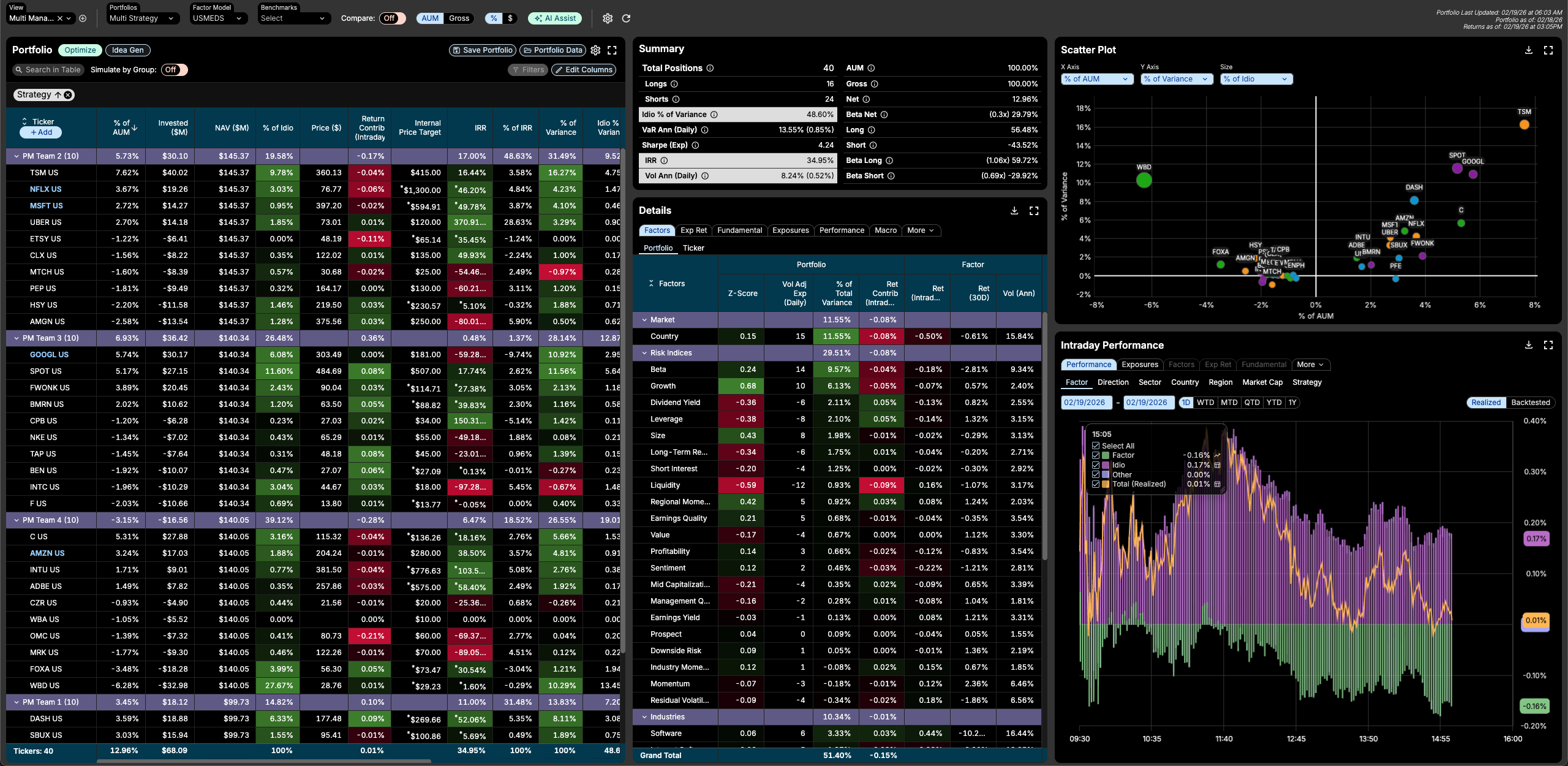
What Matters Most for Asset Owners and Oversight Teams
- Transparency into how investment decisions are made
- Consistent, repeatable processes across managers
- Clear understanding of risk exposures and concentrations
- Attribution that explains outcomes, not just returns
- Governance, documentation, and auditability
How Allocators Use the EDS Platform
Products Most Relevant for Allocators
Before EDS
-
Limited visibility into manager decision-making
-
Performance reviewed without sufficient context
-
Risk understood after the fact
-
Manual reporting and fragmented oversight
-
Inconsistent documentation across managers
After EDS
-
Clear insight into how decisions are made
-
Better understanding of portfolio risk and exposures
-
Attribution tied to process, not just outcomes
-
Stronger governance and monitoring
-
More informed, consistent oversight
Common Integrations for Allocators
Custodial and performance systems
Risk models
Data platforms used by underlying managers