A Guide to Research Management Systems (RMS) and how Hedge Funds can use AI to Improve their Investment Process
TLDR: A research management system (RMS) is the system of record for your fund's research. It’s the one place where notes, models, transcripts, price targets, and KPIs are centralized and connected to portfolio decisions. Over time that accumulated record becomes your fund's institutional memory: an evolving picture of how you think, what you've learned, and why you hold what you hold. It's what turns a database into something closer to a brain that is aware of your fund’s strategy and process and can reason over it. This guide explains what a modern RMS does, how research management evolved from spreadsheets and email, the capabilities institutional buyers should evaluate, how AI is changing RMS use cases without surrendering institutional control, and how to think about building versus buying.
The Problem Managers are Solving For
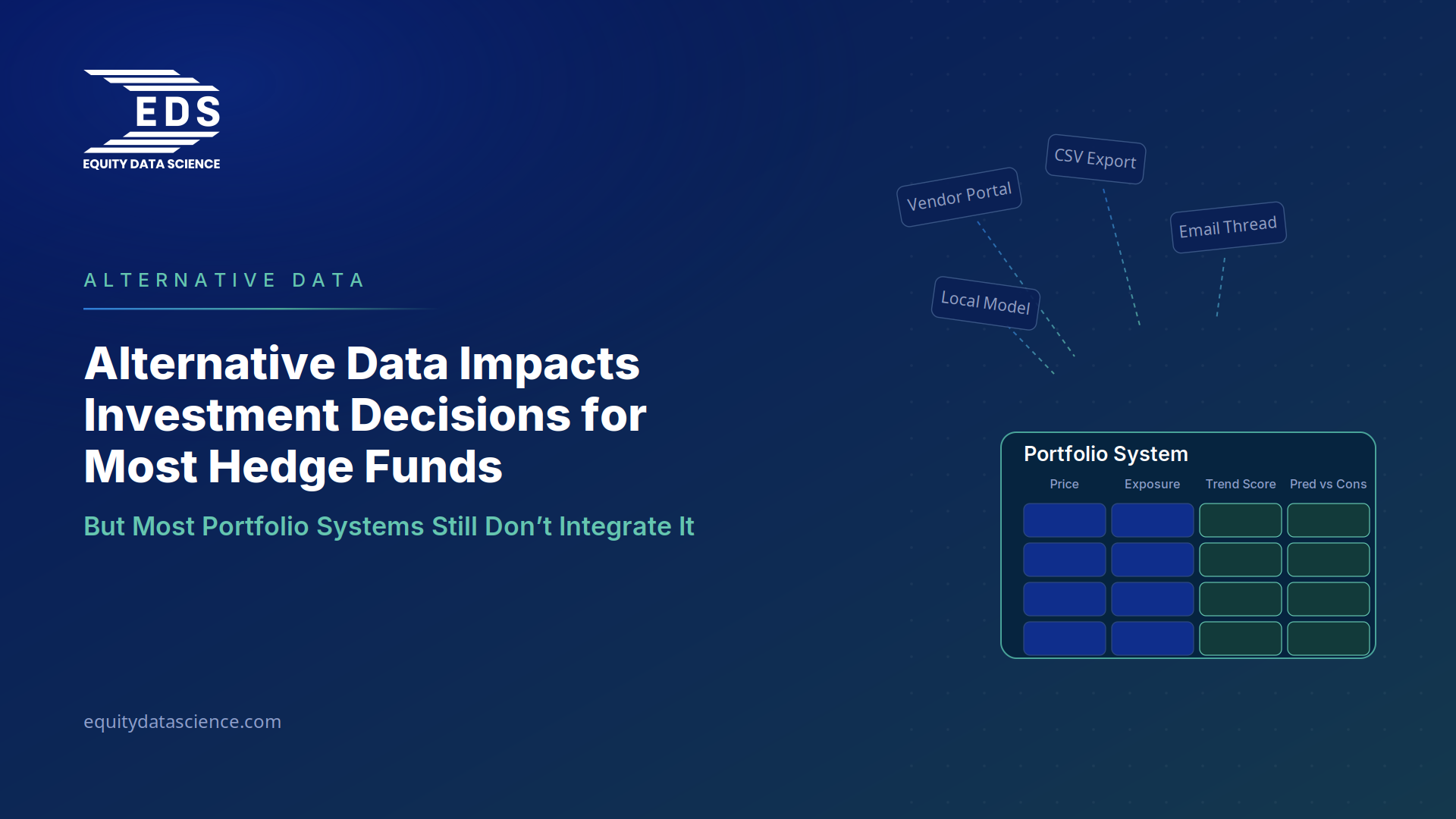
Every successful investment team has its own unique, trusted research process that leverages the strength of their analysts, the experience of their PMs, risk managers, and data experts. Usually, that process is more messy than they would care to admit and is composed of employees with different roles and entitlements, disparate documents, systems, and data in a dozen places. For most funds, critical intelligence used as inputs into investment decisions is scattered across Excel models, Outlook emails, OneNote pages, shared drives, and, of course, the memory of whoever covers a particular name. For most funds, it works, right up until the moment a portfolio manager has a question that requires the full picture on a position and it's extremely time consuming to answer it, even though in theory it should be simple.
A research management system solves that exact problem. This guide is a complete reference on what an RMS should be, why it has become core infrastructure for fundamental investors, and how to choose one. This is especially important today, as technology evolves and investors introduce AI into their workflows. If you are comparing research management software, weighing a potential internal build, or simply trying to understand the category and how it's changing, this is a good place to start.
What Is a Research Management System (RMS)?
A research management system (RMS) is the central platform where an investment team captures, develops, and connects all of its qualitative and quantitative research. With an RMS, every prospective investment and current position carries a complete, traceable history that feeds directly into portfolio decisions. It unifies internal and external research, forecast models, investment memos, risk statistics, call notes, and KPIs in one shared and accessible workspace. As we will cover later, one of the major changes happening to RMS is that increasingly they need to serve a different type of audience beyond human investors: AI agents.
To start, it helps to specifically define an RMS because most teams believe they already have one when in reality, they do not. Some teams point to a tableau dashboard and a tagged inbox with sorted emails, a shared drive for risk models, and OneNote for notes. Each captures one slice of the research process but leaves a lot of it disconnected as different employees use different systems.
A real research management system is different from a searchable shared drive in three ways. It holds all the pieces of the decision, not just the documents. It preserves history, so you can see how an estimate, a price target, or a thesis changed over time and the thinking behind it. And it stays connected to the portfolio, so research is not an archive you search through but an input that shapes sizing and risk in real time. A shared drive helps you pull a file while an RMS helps you trace how your fund thinks.
How Research Management Evolved From Spreadsheets and Emails to a System of Record
For decades, fundamental investors have run on Excel, Word, and Outlook. Those tools are flexible and familiar, and fast. Clearly, they are not going away anytime soon, but they were never designed to manage a modern research process. As a fund and its management team grows, and as their process evolves and becomes more complex, the inadequacies of the MS suite of tools becomes more and more evident.
Consider how much content an analyst needs to analyze on a single name: transcripts and filings, management, competitors, signals from their internal models, broker research, buyside peers, alternative data and expert calls, and the risk and sizing of the position itself as it relates to the rest of the book. Fundamental investors must assemble all those moving pieces into a mosaic they use to evaluate each position. When the pieces of this mosaic live across separate applications it becomes difficult to collaborate and reconciling your internal view against the Street becomes manual work. The cost is countless hours, potentially missed opportunities and even higher operational risk.
The world's largest funds tackled this with significant investment. The likes of Citadel, Point72, Coatue, and Maverick spent years and tens of millions building research and risk infrastructure in-house. A systematized investment process was likely one of the main drivers of AUM growth, more consistent performance, and stickier capital. McKinsey called the result "digital alpha."
That is changing as technology evolves. Cloud-native research management software now delivers the same capabilities to startups, hedge funds, and large asset managers, with short deployment times and a fraction of the cost.
The category of tech that is democratizing institutional investment management has a name. EDS calls it investment process management (IPM), and the RMS is at its center.
The latest change, of course, is driven by the wide adoption of AI. Chatbots and agentic workflows offer an additional touchpoint for investors to interact with their data. The modern RMS is evolving from a system of record into a system of reasoning, the foundation on which both investors and their AI agents make investment and risk decisions.
- The moat between largest and smallest managers widened not because the larger shops had better investment ideas, but because their investment process was codified and they could afford the technology to systematize and centralize all of it.
Why Investors Need an RMS and the Hidden Cost of Fragmented Research
The cost of a fragmented research process is easy to underestimate because the process does not “feel” broken and the old familiar tools give analysts and PMs a sense of comfort. Problems surface in a subtle way, like the PM’s seemingly simple question that is extremely difficult to answer for an analyst. A position may get stale as new info becomes available and no one flags it because the original thesis is buried in a note from two earnings ago. A long bet might still be sized with conviction but the team no longer has as much conviction as when they initially opened the trade.
When funds move that whole process into a good research management system, the blind spots become visible and the context a PM needed was already assembled rather than rebuilt from scratch each time.
A good RMS system encourages investment discipline simply by surfacing information to the right people at the right time. It forces a repeatable approach to documentation, valuation, and monitoring, which is exactly what most firms struggle with. Ask a typical fund what makes its process unique, how it sizes positions, or how it decides when to sell, and the answer is often vague or similar to what any other fund with a similar strategy might say.
An RMS makes the process explicit, documented and transparent. When a process is documented you can keep track, measure, and improve it.
- One fundamental fund using EDS reported that a structured RMS let it spot positions that had grown stale, surface mismatches across the portfolio, and identify the high-conviction names worth sizing up. The same team estimated that the structure of the data made portfolio decisions roughly fifty percent faster
What a Modern RMS Does for Managers: Core Capabilities to Look For
A modern research management system is built around a few core capabilities. When you evaluate research management software, these are the components that separate an institutional-grade platform with value from a fancy database with a sleek UI.
A central research inbox. All research converges in one searchable hub: templated theses and tearsheets, free-form notes, expert call summaries, broker notes, and emails captured and tagged automatically. Nothing gets lost, buried, or siloed.
A single view of every company. A company dashboard brings models, estimates, price targets, KPIs, transcripts, and commentary into one real-time view of a single name. No toggling between tools, no fragmentation, just a complete and current picture of what you believe and where you are differentiated.
Your view versus consensus. A strong RMS benchmarks your internal forecasts and valuation against the Street so you can see, instantly, where your thesis is genuinely differentiated and where it may be drifting toward consensus.
Performance and hit rates. The system tracks how your calls on a name have performed over time, including batting and slugging averages, so strengths and blind spots are exposed rather than assumed.
A research grid and structured workflow. Tasks, deadlines, alerts, and clear coverage turn idea generation and monitoring into a managed process rather than a scramble, with quantitative model and market data sitting alongside qualitative work.
Frictionless capture. Plug-ins for Excel, Word, and Outlook let analysts keep working in familiar tools while the RMS centralizes the output automatically. Adoption fails when a system forces people to change how they work, so the best platforms meet teams where they already are.
Version control, audit trails, and transparency. Every update becomes part of a company's research timeline. You can see how thinking evolved, who changed what, and when.
Configurable to your process. Fields, templates, and calculations bend to each firm's methodology rather than forcing a rigid one. Every investor is distinct in how they choose and manage investments, and the system has to fit, or no one uses it.
AI-ready and mobile. Auto-tagging, natural-language search, and a mobile app with real-time alerts keep research current and accessible from anywhere.
How to Evaluate an RMS: The Questions Managers Should Ask When Selecting a Vendor
If you are comparing RMS platforms, most evaluations focus on the feature checklist. The features matter, but they are not everything. These are the questions that separate a real research management system from vaporware, and most vendors struggle with the first one.
Which pieces of the decision do you actually have access to? This is the most important question to ask any RMS vendor. A system can only build institutional memory if it holds the full set of inputs: the data, the content, the calculations, and the history. Most tools are missing pieces. A note app has the notes but not the models. A risk system has the exposures but not the thesis. Without the complete picture, the system cannot reconstruct why a decision was made, and in an AI-driven world that incompleteness becomes a serious weakness, because an AI grounded in partial data produces partial answers.
How flexible is it? Every fund has its own methodology, calculations, and language. A research management system has to map to your process from day one, not force your team into someone else's template. Configurability is not a nice-to-have. It is the difference between a system people adopt and one they quietly abandon.
Who has permission to which data?
Access inside a serious investment team is never all-or-nothing. Different roles need different views: an analyst covering one sector should not see another pod's positions, a junior should not see firm-wide P&L, and risk, research, and operations each need their own scope. Different strategy teams need walls between them too, so one team's models, notes, and exposures stay invisible to another. A robust research management system treats these entitlements as core architecture rather than a setting added later, and it gives administrators a dedicated admin tool to decide exactly who can access which data, by role and by team. That granular control is what lets a multi-strategy or multi-manager firm run on one system without breaking its information barriers, and it is the same permission layer that keeps AI outputs entitlement-aware once you put a model on top.
Will it hold up as things change? Future-proofing is critical as changing systems is onerous especially for large teams. But if you buy a tool just for the workflow you have today and ignore where research is heading you can be sitting on an outdated system in just a few short years. A modern RMS system needs to be accessible to AI agents. An RMS that cannot serve as a governed, permissioned context for AI is already behind, no matter how good its note-taking is.
Build vs. Buy: Should You Build Your Own RMS?
Funds that take research seriously eventually ask whether to build their own research management system. It is the right question, and for the large majority of firms it makes sense to buy.
The case for buying comes down to three points. First, if your edge is your investment process rather than technology, building diverts focus and talent away from the thing that actually generates returns. Second, building is always more expensive than it looks, and almost always more expensive than buying. Third, and most underestimated, is the ongoing cost of ownership. The build is only the beginning. Onboarding, supporting users, fixing what breaks, and evolving the platform as markets and data change is a permanent commitment, not a one-time project.
There are real exceptions. Building can make sense if you already run a legacy environment with a mature internal development team, if your setup is complex enough that you need multiple internal layers of data validation rather than relying on a vendor, or if your process is quantitative and rules-based enough that the technology is itself part of the edge. Outside of those cases, the math favors a configurable, cloud-native RMS that delivers in weeks what a build delivers in years.
The firms that built in-house a decade ago did it because they had no alternative. Today you do, which is why a category that was once the preserve of the biggest funds is now standard infrastructure across the market.
Frequently Asked Questions
What is a research management system (RMS)? A research management system is the central platform where an investment team captures, structures, and connects all of its qualitative and quantitative research, so every company and position carries a complete, traceable history that feeds directly into portfolio decisions. It unifies notes, models, transcripts, price targets, KPIs, and consensus data in one workspace.
What is the difference between an RMS and a shared drive or note app? A shared drive or note app stores one slice of the research process, usually documents or notes, and leaves the rest disconnected. A real research management system holds all the pieces of a decision, preserves the history of how a thesis and estimates changed over time, and stays connected to the portfolio so research drives sizing and risk in real time.
What features should a research management system have? Look for a centralized research inbox, a single real-time view of each company, your view versus consensus, performance and hit-rate tracking, a structured research grid, Excel/Word/Outlook plug-ins, version control and audit trails, configurable fields that match your process, and AI that is grounded in your own data.
How does an RMS use AI? A purpose-built RMS grounds AI in your fund's proprietary data with the right permissions and controls. The best implementations use deterministic analytics so every number is verified rather than model-generated, keep outputs entitlement-aware and auditable, and let teams query the system from tools like Claude and ChatGPT through an MCP server while preserving accuracy, compliance, and verification.
Should we build or buy a research management system? Most funds should buy. Building is more expensive than it looks and carries a permanent support and maintenance cost. Building can make sense if you already have a mature internal dev team and legacy environment, need multiple internal data-validation layers, or run a quantitative, rules-based process where the technology is part of the edge.
What is the best RMS for hedge funds and asset managers? The best RMS is the one that holds the complete decision picture, configures to your methodology, connects research to portfolio construction, risk, and attribution, and provides governed AI on top. EDS delivers this through its Research Suite and the Nexus platform, taking teams from research to portfolio decisions in one system.
See the EDS Research Management System on Your Own Data
EDS is the investment system of record for fundamental hedge funds and asset managers, unifying research, portfolio construction, factor risk, performance attribution, and governed AI in one platform. See what a modern research management system looks like running on your own research, models, and positions.
Try EDS for free →